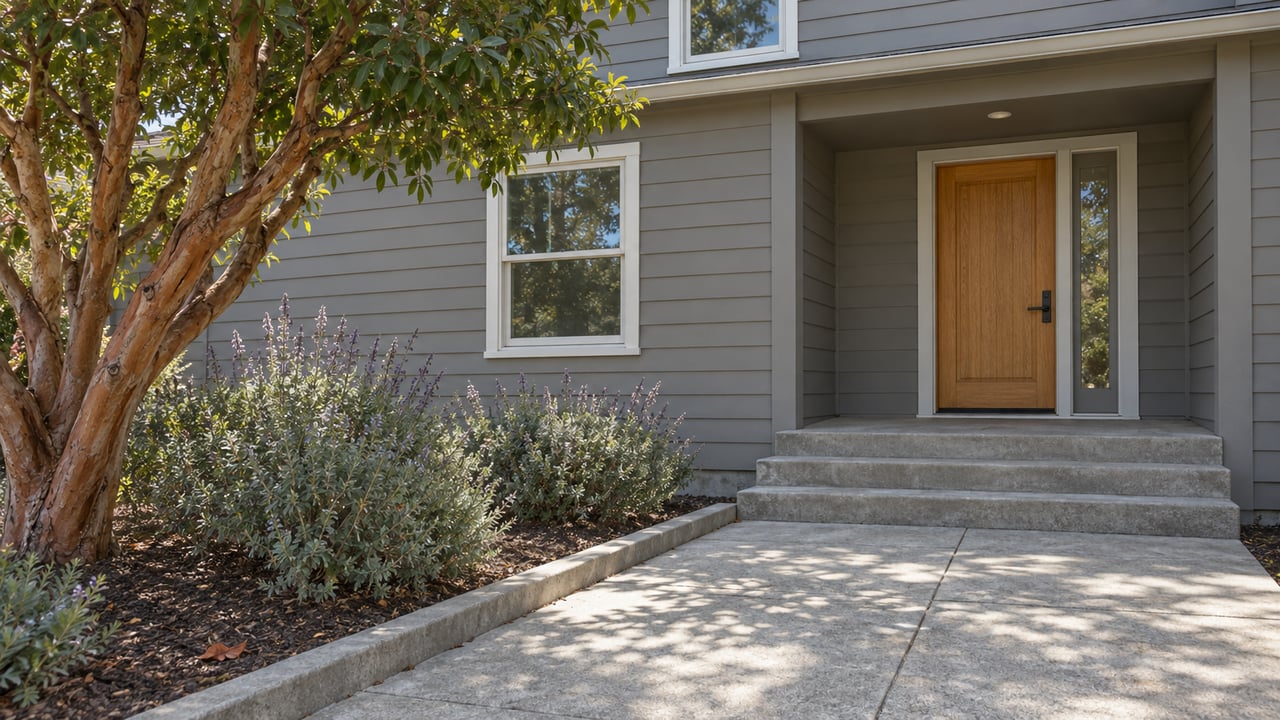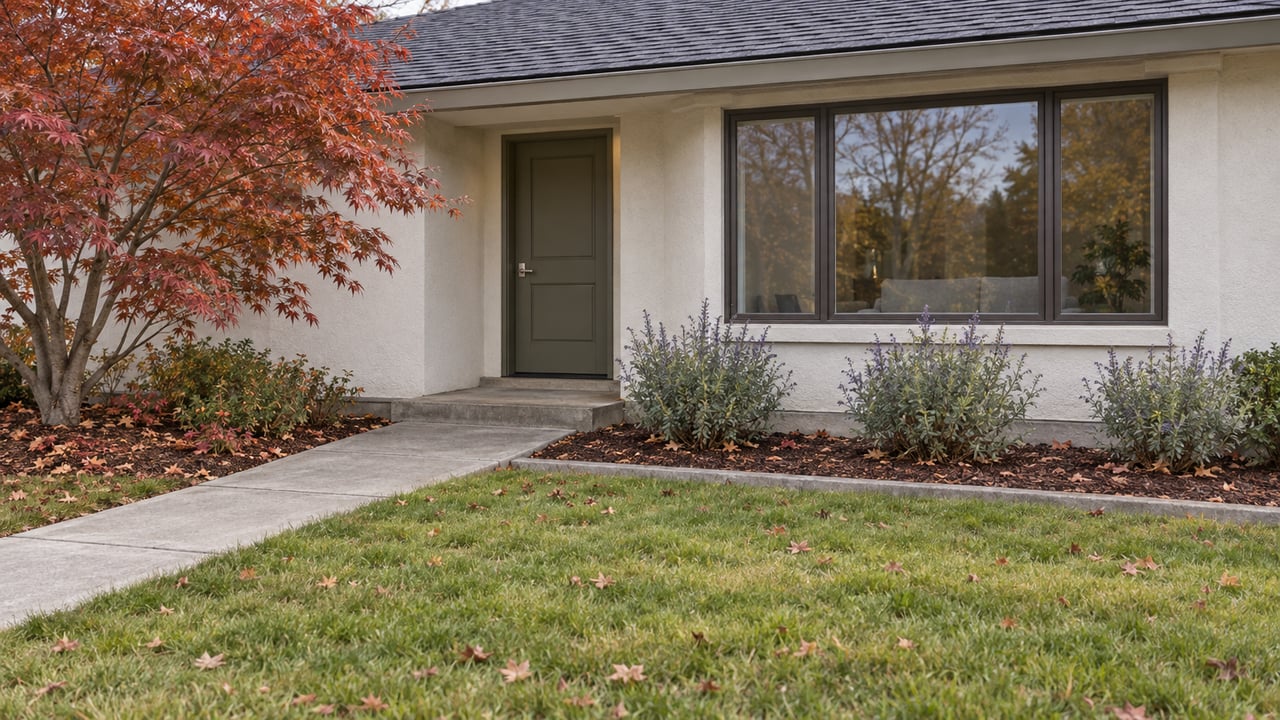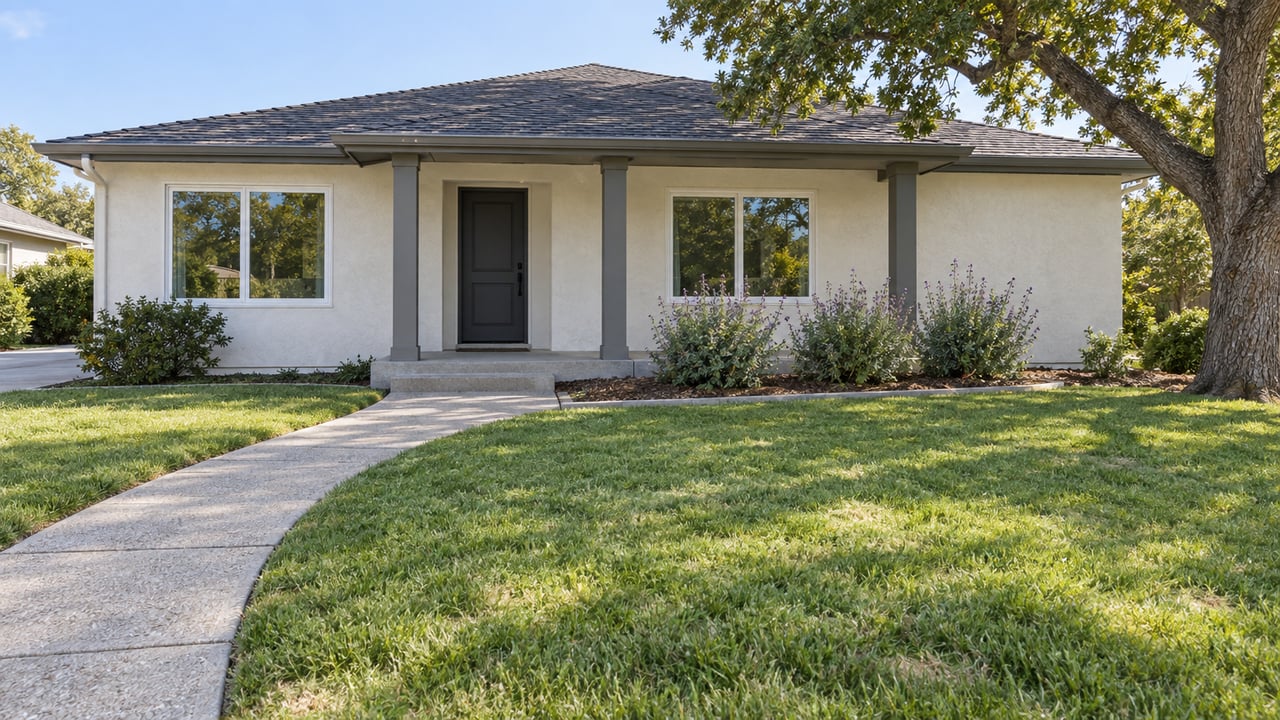
Two houses list on the same Friday in Sacramento County. Same builder floor plan, same square footage, same $550,000 asking price. One is in a neighborhood platted in 1998. The other is a newer parcel in Folsom Ranch or southeast Elk Grove. The buyer who writes on the newer one will pay roughly $3,300 more per year to own it, every year, for decades. Nothing about that gap shows up on the listing.
That gap is the story of buying in Sacramento County in 2026. Not the median price, not the days on market, not the rate lock. The gap is a line on the property tax bill labeled CFD, and it is the number that quietly rewrites the affordability of every new-construction submarket in the region.
The listing price is the easiest number in the file. The total effective tax rate is the one that decides whether you can actually afford the house.
Two houses, one street, different payments
Sacramento County's base property tax runs a combined effective rate of roughly 1.05% to 1.3% of assessed value once voter-approved school and city bonds are folded in. On a $550,000 home at 1.15%, that is about $6,325 a year, or $527 a month inside your escrow.
Newer master-planned parcels sit inside a Community Facilities District, or CFD, formed under the Mello-Roos Community Facilities Act of 1982. The CFD levies a separate special tax that funds the roads, parks, schools, fire, water and sewer infrastructure the county was not going to build with existing tax revenue. On a Sacramento County parcel the special tax typically runs $150 to $250 a month, and in some newer subdivisions the annual charge lands in the $2,000 to $6,000 range. Layer that on top of the base rate and you land at a combined effective rate closer to 1.5% to 1.75%, sometimes higher.
The math on the same $550,000 home:
| Scenario | Effective rate | Annual tax | Monthly (escrowed) |
|---|---|---|---|
| Established parcel, no CFD | 1.15% | $6,325 | $527 |
| Newer CFD parcel, moderate | 1.60% | $8,800 | $733 |
| Newer CFD parcel, aggressive | 1.85% | $10,175 | $848 |
The two CFD parcels are not exotic. They describe most of what is being marketed as new construction in Sacramento County right now: Folsom Ranch and Empire Ranch parcels in southeast Folsom, Poppy Ridge and Fieldstone in southeast Elk Grove, and pockets of Natomas and Rancho Cordova with active CFDs. Older Folsom neighborhoods like Empire Oaks and Blue Ravine sit outside those districts. So do most Sacramento parcels platted before the mid-1990s.
The buyer who compares only sticker prices is comparing the wrong number.
The line item that shrinks your pre-approval
The CFD does not just raise your carrying cost. It shrinks the house you qualify to buy.
Lenders include Mello-Roos in your debt-to-income calculation and your escrow estimate. A $3,000 annual special tax is $250 a month of qualifying capacity that your file no longer has. On a 6.75% thirty-year note that is roughly $38,000 to $40,000 of purchase power that quietly evaporates before the pre-approval letter is issued. Two buyers with identical W-2s can be pre-approved for meaningfully different price points depending on which submarket their agent has been showing them.
This is where the market conditions matter. Sacramento County's median hovered around $500,000 to $530,000 through spring 2026, with the Zillow Home Value Index for the county at $530,243 as of the 3/31/2026 update and homes going pending in roughly 14 days. Inventory has loosened. Redfin measured Sacramento at about 18 days on market in the three months ending May 2026, and JVM Lending pegged county months-of-supply at about 2.4, up 15% to 20% year over year. Buyers finally have room to inspect, negotiate, and walk. That room is worth nothing if the buyer's pre-approval was written against the wrong tax assumption and the offer has to be rewritten in the final week of escrow.
The order matters. Ask your lender for a payment estimate that includes the special tax before you tour, not after.
Verifying the CFD at the parcel level
This is the part every buyer should do themselves, and most do not until escrow. It takes about fifteen minutes.
- Pull the Assessor's Parcel Number from the listing. Every verification below is APN-specific. Two parcels on the same cul-de-sac can carry different CFD status.
- Open the most recent secured tax bill through the Sacramento County e-PropTax portal. Scroll past the 1% ad valorem line and the voter-approved bonds. Look for any line reading "CFD," "Community Facilities District," "Special Tax," "Direct Charge," or the district's formal name. The bill shows the exact dollar amount charged to that parcel for the current year.
- Read the preliminary title report. During escrow the prelim will list recorded CFD liens against the parcel, including the formation documents you can request from the district.
- Check the NHD. The Natural Hazard Disclosure report you receive in the transaction states whether the property sits inside a CFD and points to the underlying documents.
- Call the district. For a Folsom parcel that is the City of Folsom finance department alongside the Sacramento County Treasurer-Tax Collector. The formation documents show the rate schedule, the calculation method (per parcel, per square foot, tiered by unit type), any annual escalator, and the year the underlying bonds mature.
Two details worth pinning down in that call. First, whether the special tax has a CPI escalator or a fixed annual step. Some CFDs are level, some grow. Second, whether the district funds only bond repayment or also ongoing services. A pure bond-repayment CFD will eventually retire. A services-funded component can outlast the bond and continue indefinitely.
Prop 19 does not carry Mello-Roos
Sellers over 55 moving inside California often plan around Proposition 19, which allows a qualifying homeowner to transfer their Prop 13 base year value to a replacement home. That transfer is real and useful. It does not transfer the Mello-Roos.
The special tax attaches to the parcel, not the owner. A seller leaving an established Sacramento neighborhood with no CFD and buying into Folsom Ranch keeps their favorable ad valorem base under Prop 19, then picks up the full CFD assessment of the new parcel on top of it. The payment math on the move needs to account for the special tax as a fresh cost, not a wash.
For move-up families relocating from the Bay Area, the direction of surprise runs the other way. A buyer trading a $1.6M Peninsula house for a $700,000 Elk Grove home sees the sticker win clearly. The effective tax rate closes some of that gap. Not enough to change the decision in most cases, but enough that the underwritten monthly payment should be built from the CFD-inclusive number, not the 1.1% assumption imported from a Santa Clara County spreadsheet.
What this means at the offer table
Three practical moves change outcomes on CFD parcels.
The first is the offer structure itself. In a market where JVM's tracking shows inventory up meaningfully year over year, a buyer writing on a Mello-Roos parcel has room to ask for a price concession or a seller credit calibrated to the capitalized value of the special tax. On a $3,000 annual CFD with twenty-two years of remaining bond life, that is real money to negotiate against, not a rounding error.
The second is the prepayment question. Some CFDs allow the property owner to redeem the special tax obligation by paying off the parcel's allocated share of the underlying bond. Whether that math pencils depends on the redemption formula, the remaining term, and your holding horizon. Ask the district. If prepayment is available and the number is reasonable, it is sometimes worth folding into the purchase negotiation rather than treating it as a post-closing decision.
The third is comparison discipline. When you are weighing a $550,000 CFD parcel against a $585,000 established-neighborhood parcel, run the full monthly payment on both, including escrow, before you decide which is the better buy. The cheaper sticker often loses that comparison.
Sacramento County in 2026 is a market where preparation wins more often than aggression. The special tax is where that preparation earns its keep.
Short FAQ
Does every new-construction home in Sacramento County have Mello-Roos? No. Not every parcel in Folsom, Elk Grove, or Natomas sits inside a CFD, and even within a single subdivision the status can vary by phase. Verify on a per-APN basis. Do not trust "newer means CFD" as a rule.
How long does the special tax last? Sacramento County CFDs commonly run 20 to 40 years, tied to the underlying bond term. Some include a services component that continues after the bonds retire. The formation documents are the only reliable answer for a specific parcel.
Is Mello-Roos deductible with regular property tax? That is a question for a tax professional. The deductibility treatment depends on whether the special tax funds capital improvements or services, and how the IRS characterizes the specific charge. Do not assume it mirrors your ad valorem tax.
Can the seller pay it off before closing? Sometimes. Where a CFD permits prepayment or bond redemption, the seller can retire the parcel's share of the underlying debt. The payoff figure comes from the district. Whether the seller will agree to do it is a negotiation item.
If you are underwriting a move into Sacramento County from the Bay Area, from out of state, or across town, the payment number that matters is the one that includes the special tax on the specific parcel you are writing on. JohnsonGroupCA runs that math with clients before the tour, not after the offer. Get a Free Home Valuation and a parcel-level tax breakdown on the homes you are already watching.